
LANSING, Mich.—For the last five years, college athletes across the country to sign endorsement deals and build personal brands worth thousands and sometimes millions of dollars through name, image, and likeness deals (NIL). And in January, the Michigan High School Athletic Association (MHSAA) has approved high school athletes to profit from their name, image and likeness under new rules.
MHSAA calls NIL personal branding activities (PBA). Since 2021, more than 30 states adopted policies permitting high school athletes to participate in PBA under specific guidelines, and Michigan is now one of them.
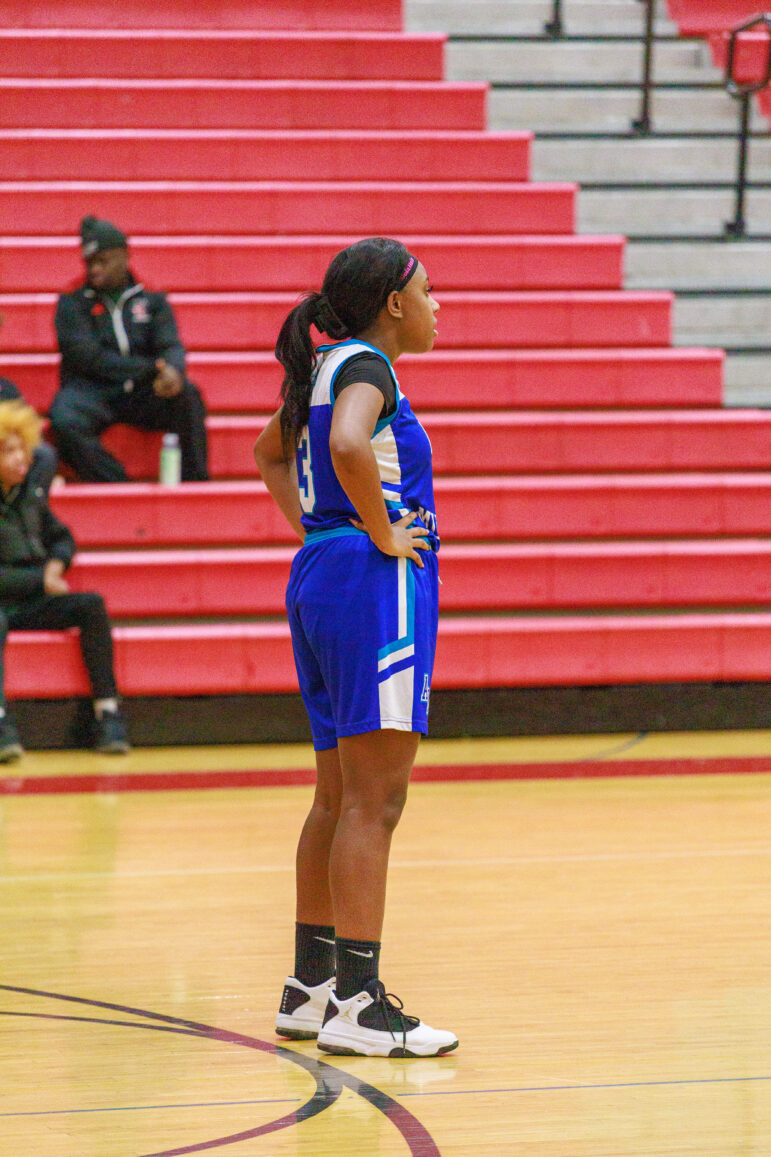
According to the MHSAA handbook, athletes may accept compensation via social media, endorsements, appearances and merchandise, but deals must be independent of school, coach or booster involvement and cannot use school logos or facilities.
For many students, this new rule feels refreshing as compared to the previous restrictions.
“I’ve seen players my age in other states sign local deals with restaurants or clothing brands,” said Jayden Mitchell, a junior wide receiver at East Lansing High School. “If we’re already putting in the work and building followings, I don’t understand why we can’t benefit from it.”
Mitchell said he has more than 8,000 followers across social media platforms and regularly receives messages from local businesses asking about collaborations. However, he has declined the offers out of concern for violating eligibility rules.
Coaches, however, worry about the unintended consequences.
“If NIL comes into high school sports without clear guardrails, it could change the culture,” said Mark Reynolds, a parent of a senior ELHS baseball player. “High school athletics are supposed to be about development, education and teamwork. Once money enters the equation, you risk shifting the focus.”
Parents’ and coaches’ concerns about the effect of sponsorship deals on youth sports echoes some of the same concerns when NIL was approved for college sports. Nationally, the conversation continues to evolve. In states such as California and Louisiana, high school athletes are permitted to sign NIL deals, although they have similar restrictions as those outlined by the MHSAA.
However, supporters argue that NIL simply recognizes modern realities.
“Social media has already created personal brands for teenagers,” said Alicia Barnes, a sports law student at Wayne State University. “The legal question is whether high school associations can justify limiting earning opportunities that are unrelated to competitive balance.”
Barnes explained that while the NCAA changed its policy in response to state legislation and legal pressure, high school athletic associations operate independently and may be slower to adapt. She added that potential Title IX implications and compliance monitoring also complicate policy changes.
For some families, the financial dimension cannot be ignored.
“With the cost of training, travel teams and recruiting showcases, it adds up,” said Marcus Thompson, parent of a sophomore basketball player in Lansing. “If a local business wants to sponsor my son for his social media presence, that should be his right.”
As NIL becomes normalized at the collegiate level, pressure may continue to build at the high school level. For athletes like Mitchell, the previous issue represents more than just money.
“It’s about opportunity,” Mitchell said. “We see what’s possible now.”
The debate over NIL in college and high school sports will continue as more state sports associations change sponsorship rules and regulations. The financial benefit to athletes and the fairness and independence concerns of sport may always be at odds.